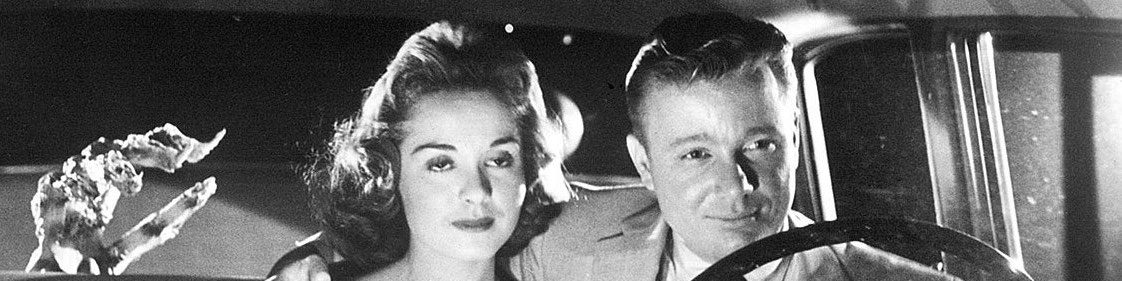

The Beast of Yucca Flats (USA, 1961) 54 min B&W DIR-SCR: Coleman Francis. PROD: Coleman Francis, Anthony Cardoza. MUSIC: Irwin Nafshur, Al Remington, Gene Kauer. DOP: John Cagle. CAST: Tor Johnson, Douglas Mellor, Barbara Francis, Bing Stafford, Conrad Brooks, Anthony Cardoza, Coleman Francis. (Cinema Associates)
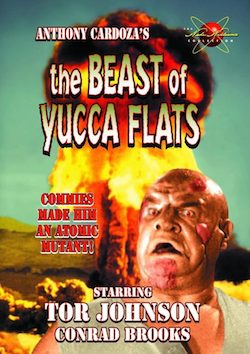
Everything you may have read about The Beast of Yucca Flats is true.
It really is one of the worst films ever made… or, are we missing the point? Surely no one would aspire to make something this terrible, or is this film an intentional gob of spit in the face of Tinseltown?
Right from the opening scene, all properties of cinema are reduced to their crudest forms. We are given a teaser of an introduction, as a cute brunette (who is briefly seen nude) gets ready for bed, and then is strangled to death by a slightly offscreen brute. Then we are given the opening credits sequence, displaying all those responsible for this film. The next scene shows a plane touching down, and exit Dr. Joseph Javorski, played by none other than Grade Z legend, wrestler Tor Johnson. As luck would have it, suddenly standard-issue hired guns show up to waste him and his associates. After a lame car chase, the doctor runs away on foot as his pals try to draw the fire of the enemy agents. Somehow, no one is able to aim at the 400-pound doctor or at least be able to run after him.
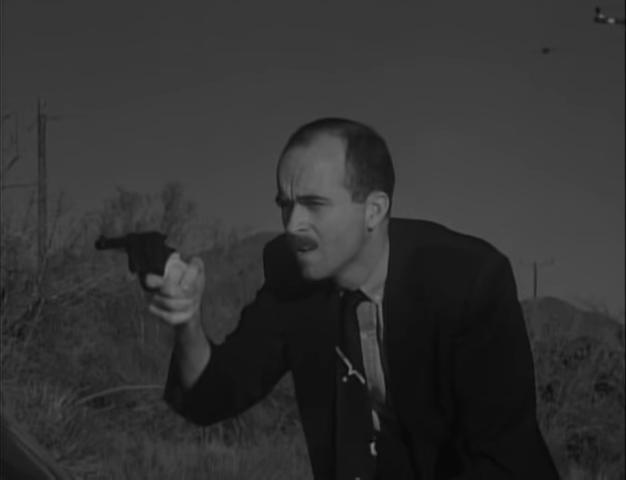
Alas, none of that matters, as an A-bomb goes off. Due to the radiation, the good doctor is now reduced to the basest form of existence, namely hulking around and strangling people. Just in these few scenes, you are introduced to the modus operandi of this film, which is to invert and pervert all that one holds dear to cinema. As the beast is humanity at its most primal state, the movie is the basest form of filmmaking. This work’s most distinctive property is the absence of a soundtrack. Even in the first scene, it is glaringly obvious; the strangulation sequence has the sole sound of a clock ticking. As much as this film devolves cinema, it is also ahead of its time.
Although we do not realize it at first, the opening scene is out of the time frame of the rest of the film, which unfolds in standard A to B narrative. Was this scene included much later in the filmmaking process as a little teaser (especially because nudity was still rare in 1961 non-raincoat cinema), or is it much more than that? We are watching something that hasn’t happened yet (never mind that this segment is never referred to again); the man is not yet a beast. This interruption of temporal logic was rare in 1961, especially in American cinema. The most peculiar thing, of course, is the film’s (lack of) soundtrack. It predates the Creeping Terror school of filmmaking if someone lost it, but Beast almost seems to have been shot without dialogue. The only “onscreen” dialogue is present during long shots or overlong cutaways- in fact, voiceover is more correct. The “you are there” feeling of the standard Z movie small towns and grassy knolls is sabotaged by the crude canned sound.
The rest of the film’s soundtrack, if not limited to spare sound effects, is filled with a tired narrator (Francis himself!) reciting the most absurd psychobabble, which has nothing to do with whatever is onscreen. During the early chase scene, the deep-thinking voice utters: “A flag on the moon, how did it get there?” It gets better. A gas pump attendant is taking an afternoon nap to the soundtrack of “Nothing bothers some people; not even flying saucers.” (?!?) The two hard-working cops separately are introduced as men “caught in the wheels of progress”. A rare sound bite that kind of makes sense is the footage of The Beast carrying away a body while the lamenting narrator mourns: “Joseph Javorski; noted scientist- dedicated his life to the betterment of mankind.”
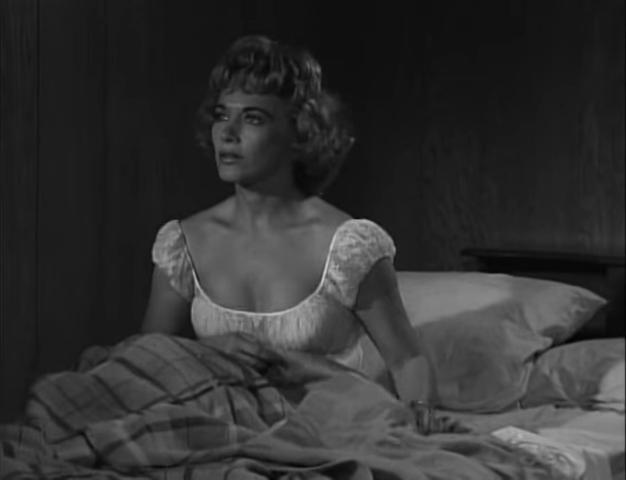
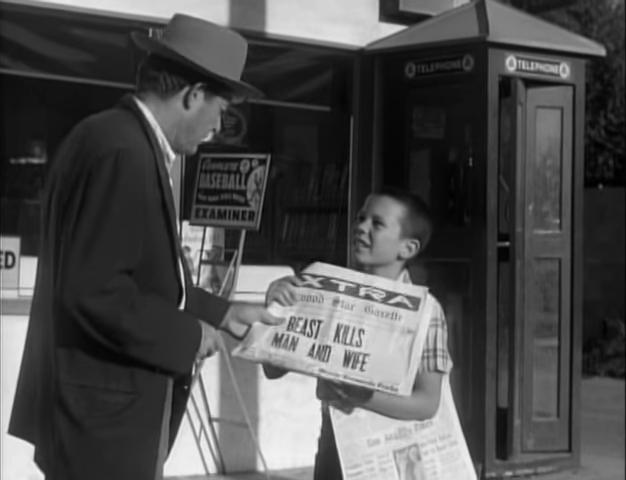
In someone’s warped mind, however, all of this could have a point. One may assume that this film’s narration babbles on to oblivion to make up for a missing soundtrack. Yet, we are also missing shots that would give an indication that dialogue scenes were actually shot in most cases. When Officer Joe Dobson “caught in the wheels of progress” picks up his partner Jim Archer, “another man caught in the wheels of progress”, the scene’s decoupage is not with two-shots of the men greeting one another, which would at least give the soundtrack relevance. Instead we get a long shot of Joe going in, cut to an extended single take of Jim’s angry wife slumping around in a nightie (surely another law was soon to have been broken?), cut to a long shot of Joe and Jim leaving. Also, when Dr. Javorski gets off the plane and starts talking to someone, we don’t hear any of the dialogue. Here, Francis may have sabotaged the one natural performance in the film… and it is from Tor Johnson, for God’s sake! He of course devotes the rest of his performance to lumbering around with what looks like a fried egg on his face- just like in Ed Wood’s Night of the Ghouls. (Were they shot the same weekend?) However, he is really the only person in the film who gives anything resembling a performance, as anyone else’s chances to emote are instead replaced by gratuitous cutaways.
But given all the narrative psychobabble about people caught in the wheels of progress and about the good doctor being reduced to a savage beast, perhaps this film is less some cheap-jack exploitation than a disturbing exploration of de-humanization. Not only is the doctor reduced to something less than human, but so are all the other “characters”, caught in the “wheels of progress”. Perhaps all of humankind is nothing but a machine- acting out the most basic of actions, without compassion, without pity. What better way to accomplish this than to rob the film of anything that might communicate warmth: performance, gesture, voice? Plus, Beast has a troubling message about the way humans treat one another. A manmade device reduces Javorski to savagery, and another stops his reign of killing. There is no standard Universal 1934 cliché here of the beast being felled by someone who cannot bring oneself to stop the monster because of the great human being it once was. Instead, the beast is hunted down like an animal by another unfeeling animal… mankind from above in a helicopter (a recurring motif in all of Francis’s oeuvre).
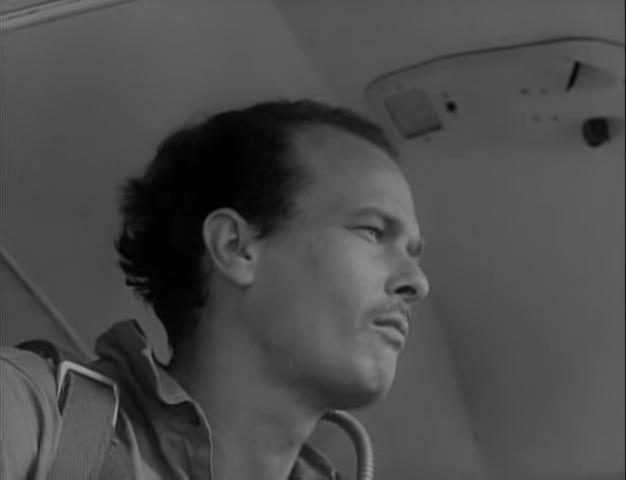
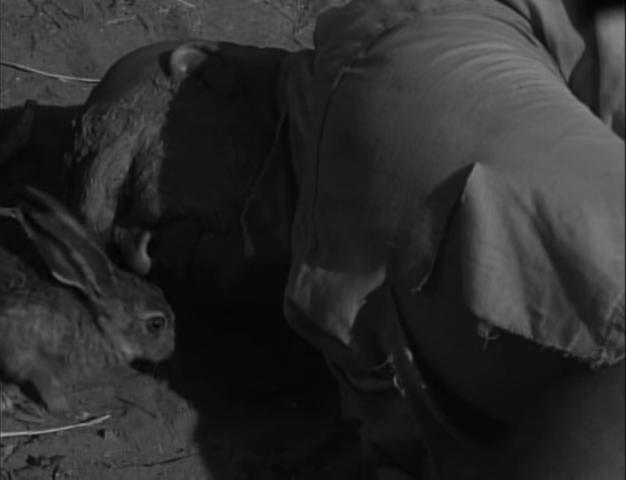
Say what you will about Beast of Yucca Flats. Even clocking in at under an hour, this ungodly turgid mess feels interminable; one of the most minimalist pieces ever committed to celluloid. But at least it’s distinct.
Beast of Yucca Flats is in the public domain, so the adventurous viewer should have no trouble finding a copy via DVD or streaming. Most will want to see it with the MST3K version, to make it move somewhat quicker. Still, in 2001 Image Entertainment saw fit to release this on DVD as a “40th Anniversary Edition”. “Anniversary” releases are usually accorded such films as Citizen Kane or It’s a Wonderful Life. Everything about Beast is… complicated.